All Regarding Metal Foundries: Comprehending Their Role in Modern Manufacturing
Metal foundries are vital in the manufacturing landscape, supplying crucial services with different casting methods. These centers change molten metal right into solid kinds, providing to varied markets. As innovation advances, foundries are adopting innovative techniques and rigorous top quality control procedures. Nevertheless, the environmental influence of steel spreading increases crucial inquiries. Comprehending these dynamics is significant for comprehending the full significance of shops in modern manufacturing. What innovations and difficulties exist ahead for this sector?

The Fundamentals of Metal Casting Strategies
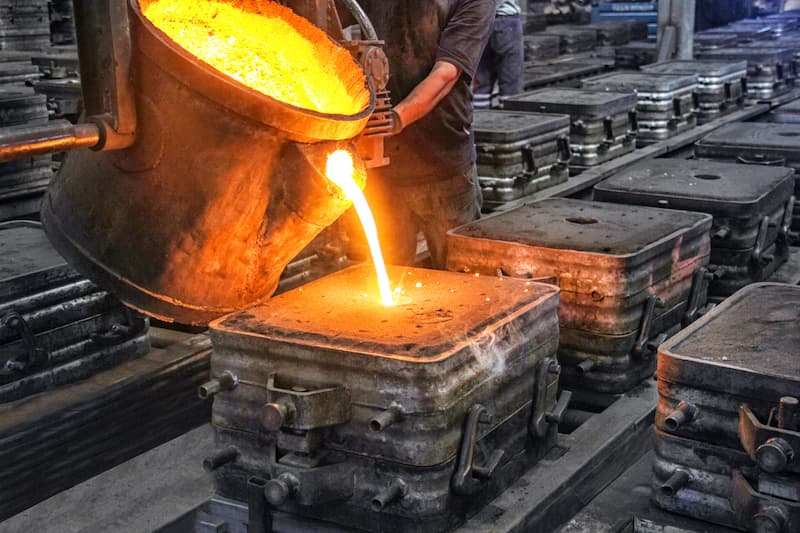
Metal spreading methods form the foundation of the steel factory industry, promoting the improvement of liquified steel right into strong objects. These strategies incorporate several methods, each customized to meet details production demands. Sand casting, among the oldest approaches, employs sand molds to develop complex shapes. Financial investment casting, recognized for its precision, makes use of wax patterns coated in a ceramic covering, permitting thorough designs. Die spreading, at the same time, counts on high-pressure injection of liquified steel right into steel molds, generating consistent and high-quality components.
In addition, lost foam spreading uses advantages in generating complex geometries without the demand for standard mold making. Each casting strategy plays a pivotal role in accomplishing wanted mechanical homes, surface coatings, and manufacturing volumes. As markets develop, these methods adapt to integrate innovations in modern technology, making sure lasting and reliable production processes. Comprehending these fundamentals equips stakeholders to make enlightened choices in metal production.
Sorts Of Metals Made Use Of in Shops
In the domain of factories, the choice of steels substantially impacts the casting process and the end product's performance. Various metals are made use of, each offering distinct top qualities matched for various applications. Typically utilized metals consist of aluminum, recognized for its light-weight and rust resistance; cast iron, which gives excellent wear resistance and machinability; and steel, valued for its strength and toughness.
Additionally, copper alloys, such as bronze and brass, are favored for their visual charm and outstanding thermal conductivity. Specialty steels, like titanium and magnesium, are used in specific markets due to their unique residential properties, such as high strength-to-weight ratios.
The selection of metal inevitably depends on the designated application, required mechanical buildings, and environmental factors to consider. Each sort of steel contributes distinctly to the factory process and influences the overall quality and capability of the produced parts.
The Value of Quality Assurance in Metal Foundries
Quality assurance plays a crucial role in making sure that the items manufactured in steel foundries satisfy market requirements and client assumptions. This process entails systematic tracking and analysis of various phases of production, from basic material option to the final casting. Implementing extensive quality control procedures aids identify problems early, lowering waste and remodel costs.
Factories employ a selection of testing approaches, consisting of visual assessments, dimensional checks, and metallurgical analyses, to verify that the castings comply with defined tolerances and product properties. Constant quality control not just boosts item integrity yet also builds client depend on and satisfaction.
Moreover, adherence to quality requirements typically results in conformity with governing requirements, which is substantial in markets such as aerospace and auto. In verdict, quality assurance is important for maintaining the honesty of the spreading process and making sure the longevity of metal foundry products in open markets.
Advancements in Factory Innovation
Improvements in innovation are reshaping the landscape of steel factories, enhancing performance and product quality. The assimilation of automation and robotics in factory operations has streamlined processes, lowering labor prices and lessening human error. Automated sand molding systems allow for faster manufacturing cycles and improved precision in casting shapes. - Aluminum Foundry
Furthermore, the adoption of advanced simulation software has actually article source revolutionized the design stage, making it possible for designers to anticipate and solve prospective problems before physical production starts. This results in a significant reduction in material waste and rework.
Furthermore, technologies in 3D printing technology are permitting for the rapid prototyping of complex elements, facilitating faster design iteration and customization. The growth of brand-new alloys and materials enhances the performance of cast items, fulfilling the evolving needs of various industries. Jointly, these innovations are click this placing steel foundries at the forefront of modern manufacturing, efficient in delivering premium items with greater performance.
Environmental Considerations in Metal Casting
As the metal casting industry progresses, environmental factors to consider are coming to be significantly critical. Growing understanding of climate change and resource depletion has actually motivated shops to embrace lasting techniques. This includes minimizing energy consumption and using cleaner modern technologies, such as electrical furnaces and improved mold products that decrease emissions.
In addition, recycling scrap metal has actually acquired importance, not just to preserve sources but additionally to decrease landfill waste. Foundries are likewise discovering alternate binders and finishes that are much less damaging to the atmosphere.
Governing stress and consumer demand for lasting products additionally compel the sector to innovate. Collaboration with environmental companies aids steel shops recognize ideal techniques and create strategies for waste monitoring.
Often Asked Concerns
What Are the Main Industries That Depend On Metal Foundries?
The main markets that rely on metal factories include vehicle, construction, machinery, and aerospace production. These industries rely on cast steel parts for their products, guaranteeing durability and you can try this out performance in numerous applications and atmospheres.
Exactly How Do Factories Make Certain Employee Safety And Security During Steel Spreading Processes?
Shops implement rigorous safety protocols, including personal safety tools, ventilation systems, and regular training programs. By checking temperature levels and exhausts, they minimize threats connected with steel casting, making certain a much safer working atmosphere for employees.
What Abilities Are Vital for Workers in a Metal Foundry?
Crucial skills for employees in a steel foundry include technological proficiency in machinery operation, attention to information, analytic capabilities, safety and security recognition, synergy, and solid communication skills to properly collaborate in a dynamic production environment.
How Do Shops Manage Waste Products and Recycling?
Shops manage waste products via systematic collection, segregation, and reusing processes. They commonly repurpose metal scraps, employ filtration systems for contaminants, and team up with recycling centers to minimize environmental impact and promote sustainability within their procedures.
What Is the Regular Lead Time for Steel Spreading Projects?
The common preparation for metal spreading projects varies from a number of weeks to a few months, relying on elements such as intricacy, materials required, and production ability. Timelines may differ based on specific job needs.
Metal shops are essential in the production landscape, supplying essential services with numerous spreading techniques. Aluminum Foundry. Metal casting strategies form the foundation of the metal shop industry, promoting the change of liquified metal right into solid things. In the domain name of factories, the option of metals substantially affects the spreading process and the final item's efficiency. Quality control plays a crucial duty in ensuring that the items made in metal factories meet sector criteria and customer assumptions. The main markets that rely on metal factories consist of auto, machinery, aerospace, and construction manufacturing